
Slipped Spinal Bone (Vertebra) Treatment | Long Island, NY
- How severe the slippage actually is
- Whether nerves are compressed
- Whether the spine is stable
- Which treatments are most likely to help
What Are the Symptoms of Spondylolisthesis?
The severity of symptoms does not always match the degree of slippage seen on imaging. A Grade I slip may cause substantial pain in one patient and no symptoms at all in another. This is why treatment decisions are never based on imaging alone. A thorough neurological and spinal evaluation is essential.
- Lower back pain that worsens with standing, walking, or leaning backward
- Pain, pressure, or aching in the buttocks
- Tightness or cramping in the hamstrings
- Numbness, tingling, or radiating leg pain (sciatica)
- Weakness or discomfort in the legs, difficulty walking long distances
What Is Spondylolisthesis?
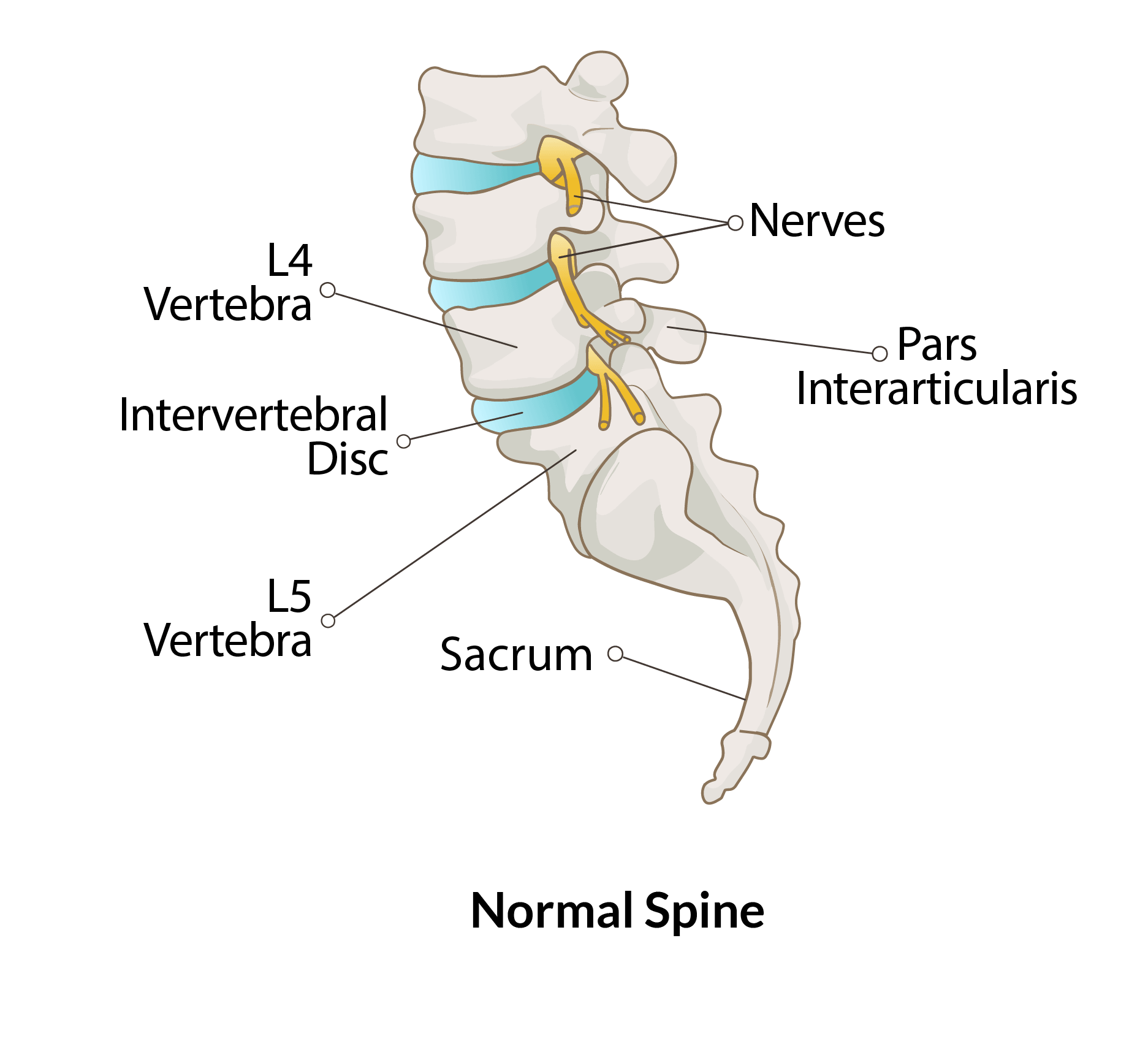
Spondylolisthesis occurs when one bone of the spine slips forward, backward, or sideways relative to the bone beneath it. Patients often describe this as a “slipped disc,” but the problem actually involves movement of the spinal bone, or vertebra, itself.
As the bone shifts out of alignment, nearby nerves may become compressed or irritated, causing the symptoms described above.
The condition most commonly affects the lower back (lumbar spine), especially at L4-L5 and L5-S1, though it can also occur in the neck (cervical spine). While spondylolysis (the underlying defect) affects roughly 6–11% of adults, progression to true spondylolisthesis is observed in approximately 3–6% of the population.3
Types of Spondylolisthesis
How Severity Is Graded
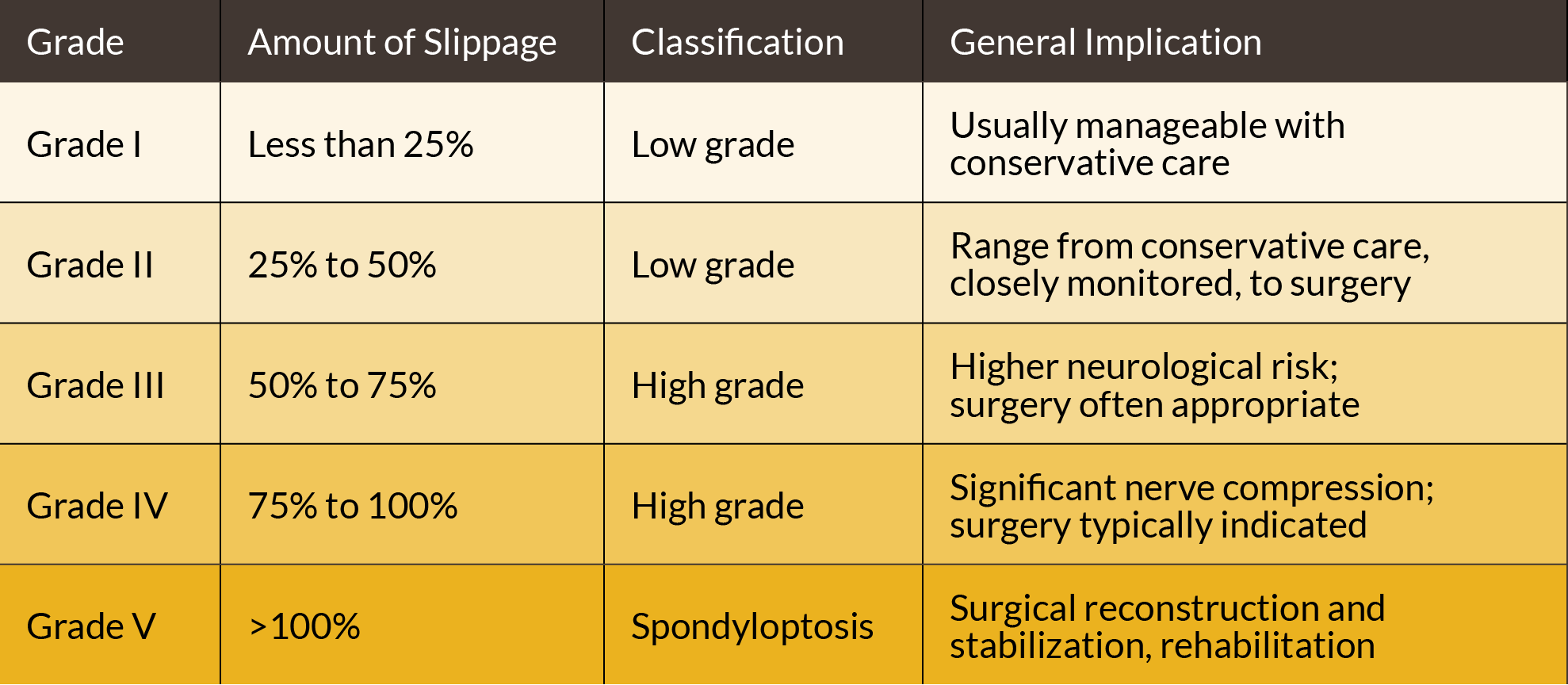
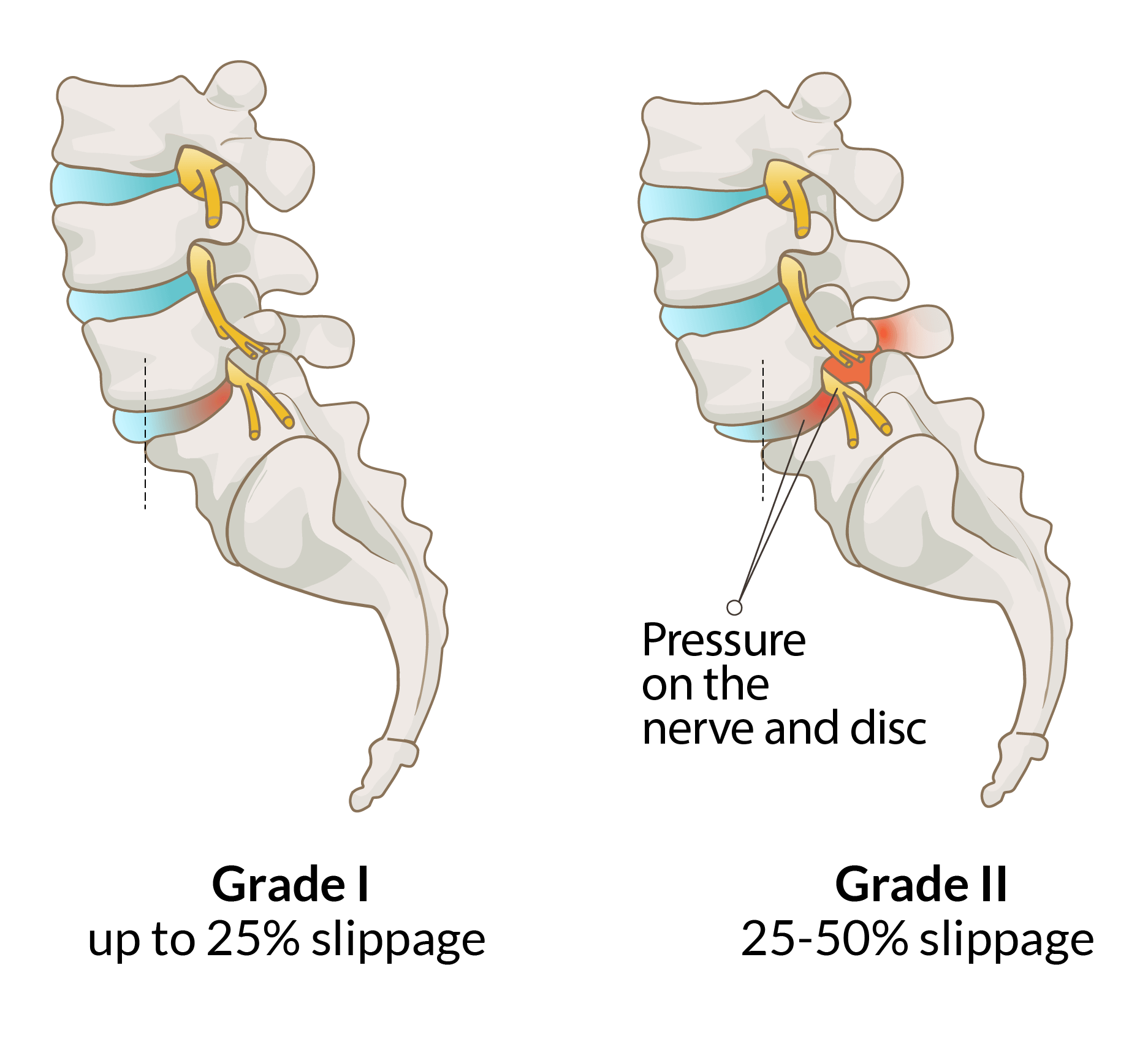
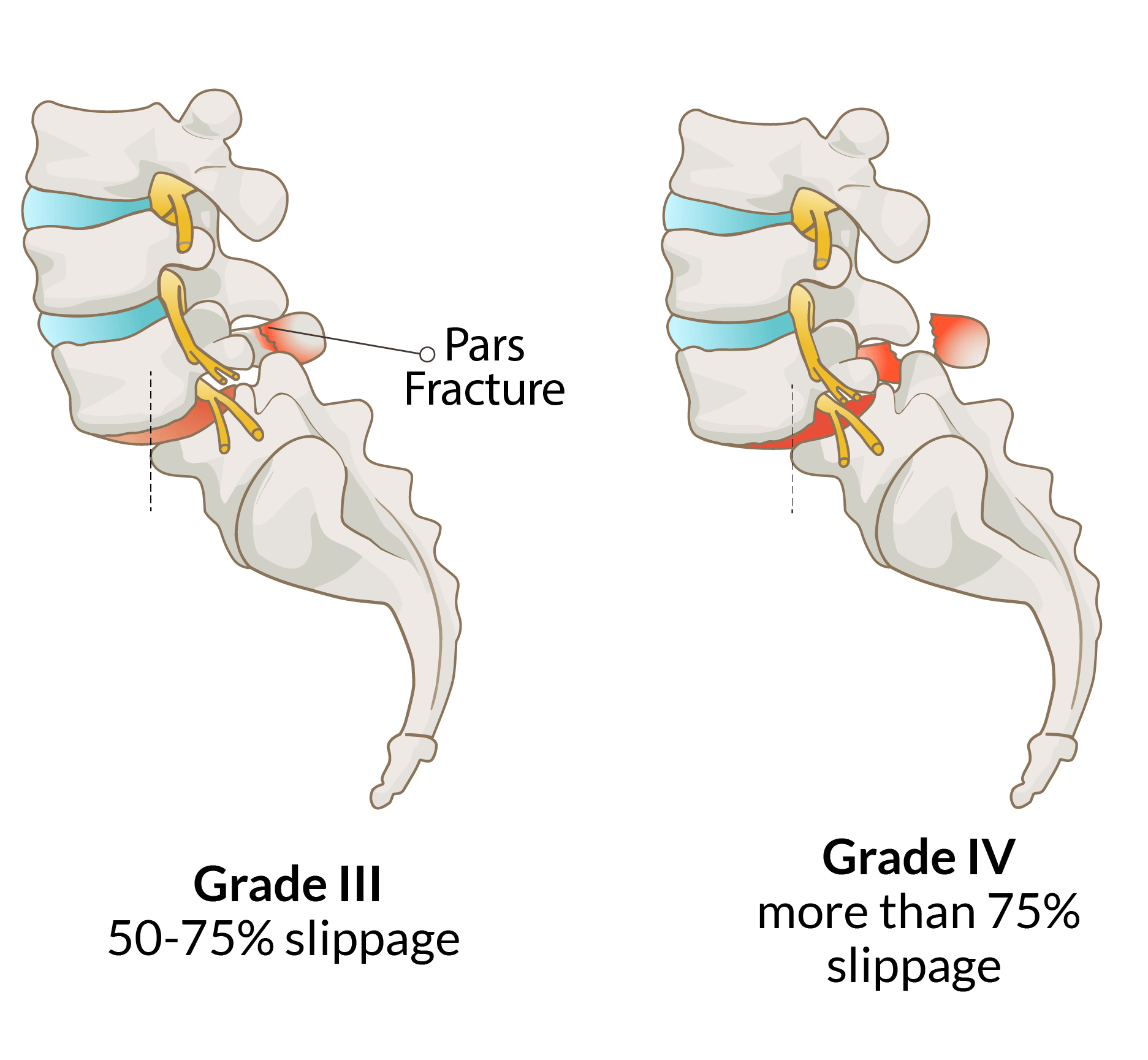
Physicians commonly use the Meyerding grading system to describe how far a vertebra has slipped. When the spinal bone has moved completely off the one underneath it, the condition is called Spondyloptosis, which is Grade V on the scale.
Spondylolisthesis FAQs
Frequently Asked Questions
Can spondylolisthesis heal without surgery?
Yes. Many patients improve substantially with conservative treatment, including physical therapy, activity modification, and anti-inflammatory measures.
Is walking good for spondylolisthesis?
Walking is often beneficial, though tolerance varies by patient. Certain activities and positions may worsen symptoms depending on the degree of instability and nerve compression.
What grade of spondylolisthesis requires surgery?
There is no absolute rule. Some Grade I slips cause severe symptoms, while some highergrade slips remain stable. Treatment decisions depend on symptoms, neurological findings, spinal instability, and quality of life.
Can chiropractic treatment worsen spondylolisthesis?
Certain manipulations may not be appropriate in cases involving instability or significant nerve compression. Consult your spine specialist before beginning any manual therapy.
Is spondylolisthesis the same as a slipped disc?
No. A slipped disc involves disc herniation, while spondylolisthesis refers to movement of the vertebra itself.
What is a pars defect?
A pars defect is a stress fracture in a small segment of spinal bone called the pars interarticularis, located in the lower back. It is the underlying cause of isthmic spondylolisthesis — when that bone weakens or breaks, it can allow the spinal bone above it to slip out of position. The fracture can result from repetitive physical stress, a structural weakness present from birth (congenital), or sometimes both.1
Is spondylolisthesis hereditary?
Research suggests it can be. The pars interarticularis begins as cartilage in the womb and gradually hardens to bone (ossifies) during fetal development and early childhood. Variations in how completely this process occurs may leave the bone structurally weaker in some individuals — a tendency that can run in families.2
What is the best treatment for lumbar spondylolisthesis?
The best treatment depends on the degree of slippage, nerve compression, spinal stability, symptom severity, and overall health of the patient.
How Is Spondylolisthesis Diagnosed?
- Nerve compression
- Spinal stenosis
- Disc degeneration
- Soft tissue structures
One important point: MRI scans performed lying down can underestimate the degree of slippage because the spine is no longer under gravitational load. Standing X-rays often provide additional information as to the extent or severity of slippage.
- Which vertebra has slipped
- The degree of instability
- Whether nerves are compressed
- Whether the condition appears stable or progressive
- Which treatment options are most appropriate
What Is the Difference Between Spondylosis, Spondylolysis, and Spondyloptosis?
Spondylosis
Spondylosis refers to age-related arthritis and wear (degeneration) of the spine. It does not involve vertebral slippage.
Spondylolysis
Spondylolysis is a stress fracture of the pars interarticularis. It may lead to isthmic spondylolisthesis if the vertebra begins to shift.
Spondyloptosis
Spondyloptosis is the most severe form of spondylolisthesis, in which one vertebra has completely displaced off the vertebra below it.
Treatment for Spondylolisthesis
When surgery is appropriate, Dr. Nkrumah carefully evaluates each patient’s imaging — including the degree of vertebral slippage, spinal instability, and extent of nerve compression — to determine the safest and most effective surgical approach. Depending on these findings, this may involve minimally invasive techniques or a traditional open approach, with the goal of properly addressing the underlying problem while supporting the best possible recovery.
Dr. Nkrumah explains every treatment option in plain language and ensures patients understand:
- Why and when surgery may be the best option
- What recovery involves
- Realistic expectations for improvement
We will explore all available alternatives before making any decision. You will always have choices.
“…I absolutely love Dr.Nkrumah and his staff – Deanna, Christina, Leidy/Lady. This was my 2nd opinion surgeon – because who wants to open up their back?? From the 1st virtual appointment, to meeting them in person I have nothing but good things to say. I did NOT feel like a number, I did NOT feel like they’re just pushing me along an assembly line – I truly felt cared for by a physician for the 1st time in a long time. … Easily accessible, easy to talk to, REALISTIC approach…and I’m so thankful.”
— Lori-Ann, Google Reviews, 2026
See more testimonials.


