
Cervical Strain and Neck Pain Treatment | Long Island, NY
What Are the Common Symptoms?
Signs of a traumatic soft tissue neck injury typically manifest within hours to days following an incident. Common symptoms include:
- Neck pain, stiffness, and reduced range of motion
- Headaches, particularly at the base of the skull
- Pain in the shoulder, upper back, or between shoulder blades (interscapular)
- Dizziness, vertigo, or mild balance disruptions
- Acute muscle spasms in the neck and upper trapezius (large back muscle that helps maintain or adjust posture)
- Numbness, tingling, or “pins and needles” in the arms or fingers
- Fatigue, irritability, or difficulty concentrating
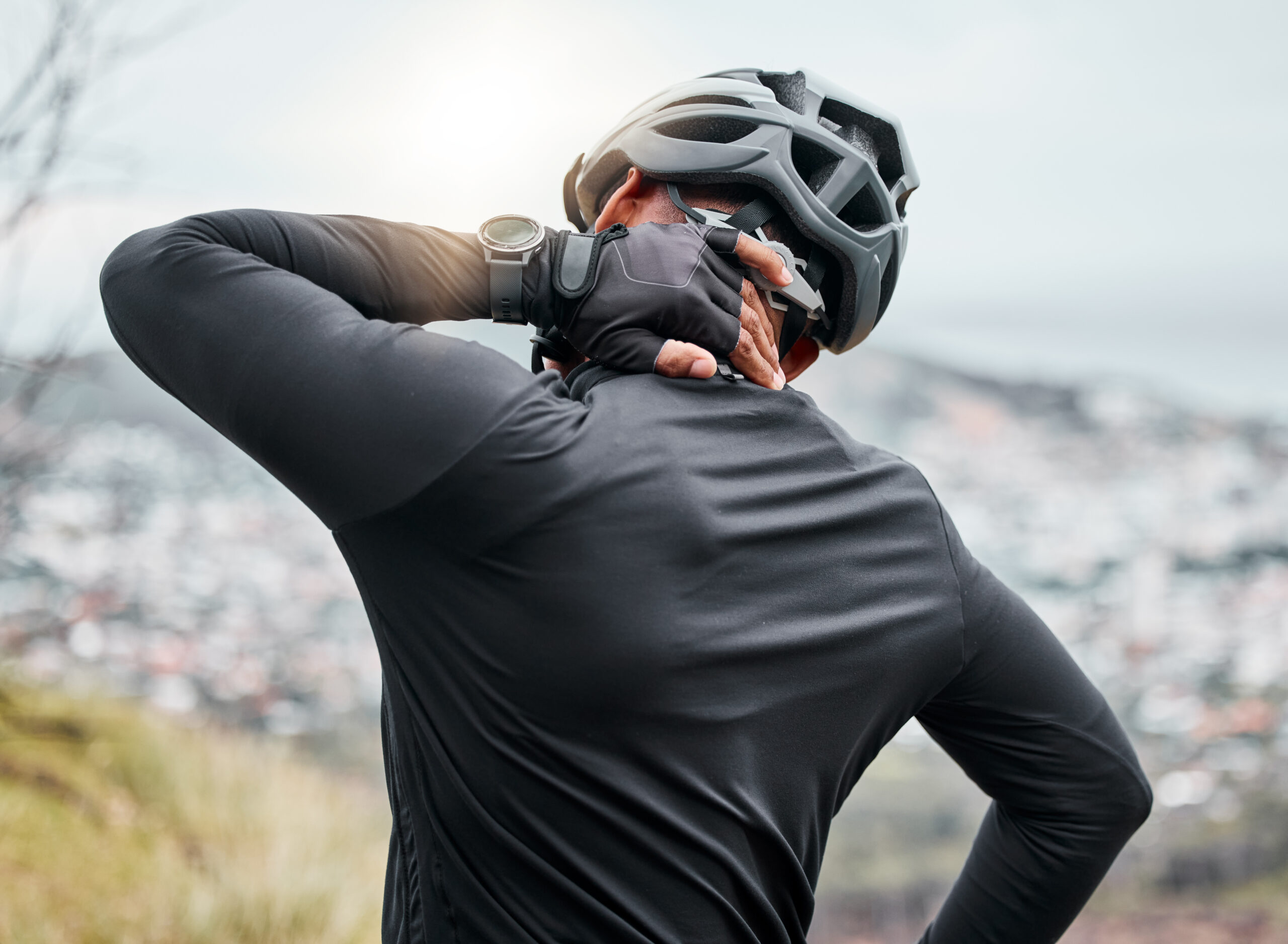
More severe warning signs—such as progressive arm weakness, significant dropping of objects, or severe radiating pain—suggest potential spinal cord or nerve root compression and require immediate neurological evaluation.
What is a Whiplash Injury?
Whiplash is a mechanical cervical spine injury caused by a rapid, forceful back-and-forth whipping motion of the neck. While frequently associated with rear-end automobile collisions, this acceleration-deceleration trauma can be sustained during any sudden, high-velocity event.
The rapid movement overstretches and strains deep neck muscles and ligaments while placing acute stress on the delicate structural components of the cervical spine. While many mild strains resolve quickly, neglected structural trauma can lead to persistent neck pain, chronic headaches, or neurological issues lasting months or years.
Sports-Related Neck Injuries & Physical Trauma
Cervical spine acceleration injuries are highly prevalent outside of vehicular accidents. Dr. Nkrumah evaluates patients who have sustained neck trauma due to:
- Athletic Impacts: High-velocity contact sports such as football, rugby, lacrosse, hockey, and martial arts.
- Recreational Activities: Forceful jars or falls sustained while skiing, snowboarding, horseback riding, or cycling.
- Accidental Falls: Slips, trips, or missteps at home or in the workplace that cause a sudden, violent jarring of the head and neck.
Athletes and active individuals often attempt to “play through” the pain, which can worsen ligament damage that leaves the joint unstable (underlying ligamentous instability) or disc damage. A prompt, expert neurological evaluation is vital to ensuring a safe return to sports and daily activities.
Frequently Asked Questions
How long does neck strain last?
Many patients experience substantial relief within a few weeks. However, severe soft tissue or ligamentous injuries can occasionally cause persistent symptoms for several months, requiring specialized intervention.
Can a neck injury cause arm numbness or tingling?
Yes. The force of a physical impact or athletic collision can stretch, irritate, or compress the cervical nerve roots, causing radiating pain, numbness, or weakness to travel down into the arms, hands, or fingers.
Can an MRI scan be normal even if I am still experiencing severe neck pain?
Yes. Standard imaging sequences do not always visualize microscopic ligament micro-tears, deep muscle strains, or functional joint dysfunction. Ongoing pain is medically valid even in the presence of a “normal” imaging report.
Is a cervical strain the same as a concussion?
No, they are anatomically distinct injuries. However, because the force required to cause a concussion almost always impacts the cervical spine, the two conditions frequently co-occur, leading to overlapping symptoms like dizziness, headaches, and concentration difficulties.
How Is a Cervical Spine Injury Diagnosed?
An accurate diagnosis begins with a meticulous neurological examination alongside an expert review of advanced spinal imaging. Diagnostic modalities include:
- X-rays: Used to evaluate structural alignment, curvature, or joint instability.
- MRI Scans: Crucial for assessing soft tissues, including intervertebral discs, spinal nerves, ligaments, and the spinal cord.
- CT Scans: Utilized when bony fractures, arthritic changes, or detailed structural anatomy must be inspected.
Dr. Nkrumah personally reviews every MRI and X-ray to identify subtle, post-traumatic structural changes that high-volume clinics might overlook, specifically looking for:
- Traumatic disc herniations, bulges, or tears
- Nerve root compression (cervical radiculopathy)
- Spinal instability or abnormal vertebral movement
- Spinal canal narrowing (cervical stenosis)
Identifying the exact anatomical structures driving your symptoms is the most critical step in establishing an effective, long-term recovery plan.
Advanced Treatment Options: Our Clinical Philosophy
Non-Surgical Conservative Care
- Targeted physical therapy and cervical stabilization protocols
- Anti-inflammatory medications and muscle relaxants
- Activity modification and specialized ergonomic coaching
- Therapeutic heat, ice, or other modalities
- Interventional spinal injections for targeted pain management
When Is Spine Surgery Necessary?
- Significant, symptomatic disc herniation causing severe nerve root compression (cervical radiculopathy)
- Spinal cord compression (cervical myelopathy)
- Progressive neurological deficits, such as worsening hand or arm weakness
- Structural spinal instability that compromises patient safety
Schedule a Comprehensive Spinal Evaluation
If you are experiencing neck pain, headaches, dizziness, or radiating arm symptoms following a sports collision, fall, or motor vehicle accident, a premier neurosurgical evaluation can provide clarity and safety.
Dr. Nkrumah allocates at least one full hour to every new patient consultation. He personally reviews your raw imaging films, explains his clinical findings in plain language, and maps out your optimal path to recovery. Call 631-525-1420 to request an appointment, email us at [email protected], or fill in the form below.
“I recently visited Dr Nkrumah. I had experienced neck pain so severe, I spent 3 days in the hospital. I highly recommend him. I’m not easily impressed; and at age 69, I’ve seen many MD’s over the years….he’s one of the best.”
— Ron A., Google Reviews, 2026
See more testimonials.


